How Workload Affects Burnout
Workload becomes a problem when the amount of work or the pace of work consistently exceeds a person’s capacity. When expectations outstrip time, tools, or staffing, people can’t recover—leading to exhaustion, mistakes, and disengagement. This isn’t about weak individuals; it’s a leadership and systems issue that organizations can fix with smarter planning, clearer priorities, and better support.
This page explores when workload shifts from challenging to harmful, how unsustainable workloads contribute to burnout, and why productivity-focused cultures often miss the warning signs. It’s designed to help both employees and leaders recognize when the problem isn’t effort — it’s the system.
Explore all topics in the Burnout 101 series:
Burnout Cause #1: High Workload - How It Fuels the Burnout Epidemic
Burnout isn’t just about being tired. It’s not the result of one bad week or a particularly demanding project. Burnout is systemic, persistent, and deeply intertwined with how we think about work itself. While many factors contribute to burnout—lack of autonomy, unfair treatment, the erosion of workplace culture—one of the most insidious and overlooked causes is workload.
The sheer volume of work expected of employees today is staggering. The modern workplace is defined by an ever-expanding list of responsibilities, aggressive deadlines, and the pressure to perform at unsustainable levels, sometimes referred to as toxic productivity. It’s no longer just about doing a job well—it’s about doing more than what is reasonable, continuously, without reprieve. This relentless drive toward productivity has become the default setting in workplaces around the world. And it is burning people out at unprecedented rates.
Maslach, C., Schaufeli, W.B., & Leiter, M.P. (2001). Job Burnout. Annual Review of Psychology, 52, 397–422. →: https://www.annualreviews.org/content/journals/10.1146/annurev.psych.52.1.397
When Does a Heavy Workload Become Unsustainable (and Lead to Burnout)?
A heavy workload becomes unsustainable when the demands of work consistently exceed a person’s capacity to recover. Long hours or intense periods aren’t inherently harmful—many roles require them at times—but problems emerge when high demands are paired with limited control, unclear priorities, or insufficient rest. When recovery is delayed or disrupted week after week, the body and brain stay in a prolonged stress state, increasing the risk of burnout, errors, and disengagement. In other words, it’s not just the amount of work that matters, but whether people have the time, autonomy, and support needed to sustain it.
In many workplaces, unsustainable workload is reinforced by cultural norms that equate constant output with value — a pattern often described as toxic productivity.
If this description feels familiar, it may be a sign that workload — not motivation or resilience — is contributing to burnout.
When Burnout Becomes a Leadership Issue
When burnout shows up across teams, roles, or departments, it’s no longer an individual resilience issue—it’s a systems problem. At this stage, leaders need more than wellness tips or time off policies. They need a shared understanding of why burnout happens, how workload and culture contribute to it, and what sustainable performance actually looks like.
When workload pressure begins affecting culture, engagement, and retention, leaders often look for guidance that can reset direction across the organization.See how Jennifer’s leadership keynotes help teams respond to sustained pressure →
The Burnout Prevention Workbook includes a dedicated section on workload — helping individuals identify where their specific workload pressures are coming from and what to do about them.
The Misconception of Productivity and How It Normalizes Overwork
We glorify the grind. We celebrate the employees who stay late, who take on extra assignments, who go above and beyond. But the cost of this culture is steep. What begins as high performance can quickly spiral into exhaustion. Employees who take pride in their ability to handle heavy workloads often don’t realize they’re in danger until they’re deep in burnout’s grip. The transition from engaged to depleted happens slowly—until, suddenly, they can’t do it anymore.
The misconception that burnout only affects people who dislike their jobs is dangerous. Some of the most engaged, passionate employees are the ones who burn out the fastest. They say yes to every request, they push themselves beyond their limits, and they ignore the warning signs. But motivation doesn’t shield the body from exhaustion. Passion does not override the physiological consequences of chronic stress. And yet, organizations continue to pile more on, assuming that committed employees will find a way to make it work.
If this resonates, a short self-check can help you understand what may be contributing to how you’re feeling. Get Clarity on your symptoms.
-
Other Pages in this Series
The Science of Overwork: What It Does to Our Minds and Bodies
Burnout is not just a feeling—it’s a measurable, physical response to chronic stress. Excessive workloads trigger a cascade of hormonal changes in the body, raising cortisol levels and keeping employees in a near-constant state of fight-or-flight. This state, meant to help us react quickly to immediate threats, was never designed to be sustained for weeks, months, or years. The consequences are profound.
Employees facing heavy workloads experience cognitive fog, forgetfulness, and difficulty concentrating. Decision-making suffers. Creativity is stifled. The very qualities that organizations rely on—innovation, problem-solving, collaboration—begin to deteriorate under the weight of excessive expectations. And yet, rather than recognizing these as red flags, many workplaces push harder. Employees who struggle are labeled as inefficient or incapable when in reality, they are simply overwhelmed.
Physically, the toll is just as severe. Chronic overwork has been linked to increased risk of heart disease, high blood pressure, weakened immune function, and digestive issues. Sleep disturbances become the norm, as stress prevents the body from fully decompressing. The irony is clear: employees are pushed to work harder and longer, but their ability to perform declines in direct proportion to their exhaustion. In the end, overwork doesn’t just harm individuals—it compromises the very productivity it is meant to enhance.
The influence of burnout on cardiovascular disease: a systematic review and meta-analysis" (PMC, 2024) → https://pmc.ncbi.nlm.nih.gov/articles/PMC10909938/
The Effect of Long Working Hours and Overtime on Occupational Health" (PMC, 2019) →: https://pmc.ncbi.nlm.nih.gov/articles/PMC6617405/
The Historical Roots of Overwork: A Legacy That Won’t Die
The idea that work should be exhausting is deeply embedded in our culture. For centuries, labor has been equated with suffering. From factory workers in the Industrial Revolution to knowledge workers in today’s high-pressure corporate environments, the expectation remains the same: real work should hurt. If it doesn’t, you’re not trying hard enough.
Fast forward to today, and while the work itself has changed, the underlying dynamic has not. The expectation to push ourselves beyond our limits is still present, just in a different form. Instead of physical labor breaking our bodies, cognitive overload is wearing down our minds. We may not be carrying stone blocks, but we are carrying an invisible weight just as crushing.
The New Normal: An Always-On Culture
Technology was supposed to make work easier. Instead, it has made work infinite. The boundary between professional and personal life has become razor-thin, with emails, Slack notifications, and project updates following us long after we leave our desks. The expectation that employees should always be available—always “on”—has created an environment where work is inescapable.
During the pandemic, this problem reached new heights. Data from multiple sources showed that the average workday increased by up to three hours in some countries. Meetings multiplied, emails piled up, and employees found themselves working late into the night just to keep up. The very idea of a stopping point became obsolete.
And yet, despite all this, the narrative remained unchanged: if you’re struggling, it must be a personal failing. You must not be managing your time well. You must not be resilient enough. Rarely do we acknowledge the obvious truth—there is simply too much work.
The Psychological Toll of Perpetual Workload
One of the most insidious effects of workload-induced burnout is the erosion of self-worth. Employees begin to equate their value with their output. If they can’t keep up, they feel inadequate. This cycle is devastating. People who once took pride in their skills and contributions begin to feel like they are drowning in tasks that no longer bring them any sense of fulfillment.
Even worse, burnout affects interpersonal relationships. Irritability increases. Patience wears thin. The ability to engage with colleagues, friends, and family diminishes. It becomes harder to enjoy moments of rest because the mind remains tethered to work, cycling through to-do lists and unfinished projects. Recovery feels impossible because there is no real opportunity for rest.
And when a crisis hits—whether it’s economic uncertainty, a leadership shake-up, or a global pandemic—the problem intensifies. Suddenly, what was already an unsustainable workload becomes a full-blown emergency. Employees who were barely holding on find themselves expected to do even more with even less. The breaking point arrives. And yet, organizations still act surprised when people walk away, unable to endure it any longer.
When Will It Be Enough?
If history has shown us anything, it’s that the limits of human endurance are not infinite. The idea that people can endlessly stretch their capacity without consequence is a myth. Yet, it remains one of the most pervasive lies in corporate culture.
We cannot continue to pretend that burnout is an individual problem, solvable with mindfulness apps and stress management techniques. Burnout is a systemic issue, driven largely by excessive workload. Until we acknowledge that reality, the cycle will continue. Employees will continue to suffer. Organizations will continue to lose their most talented people. And we will keep wondering why, despite all our efforts, burnout remains an epidemic.
Because the truth is simple: we don’t have a burnout problem. We have a workload problem.
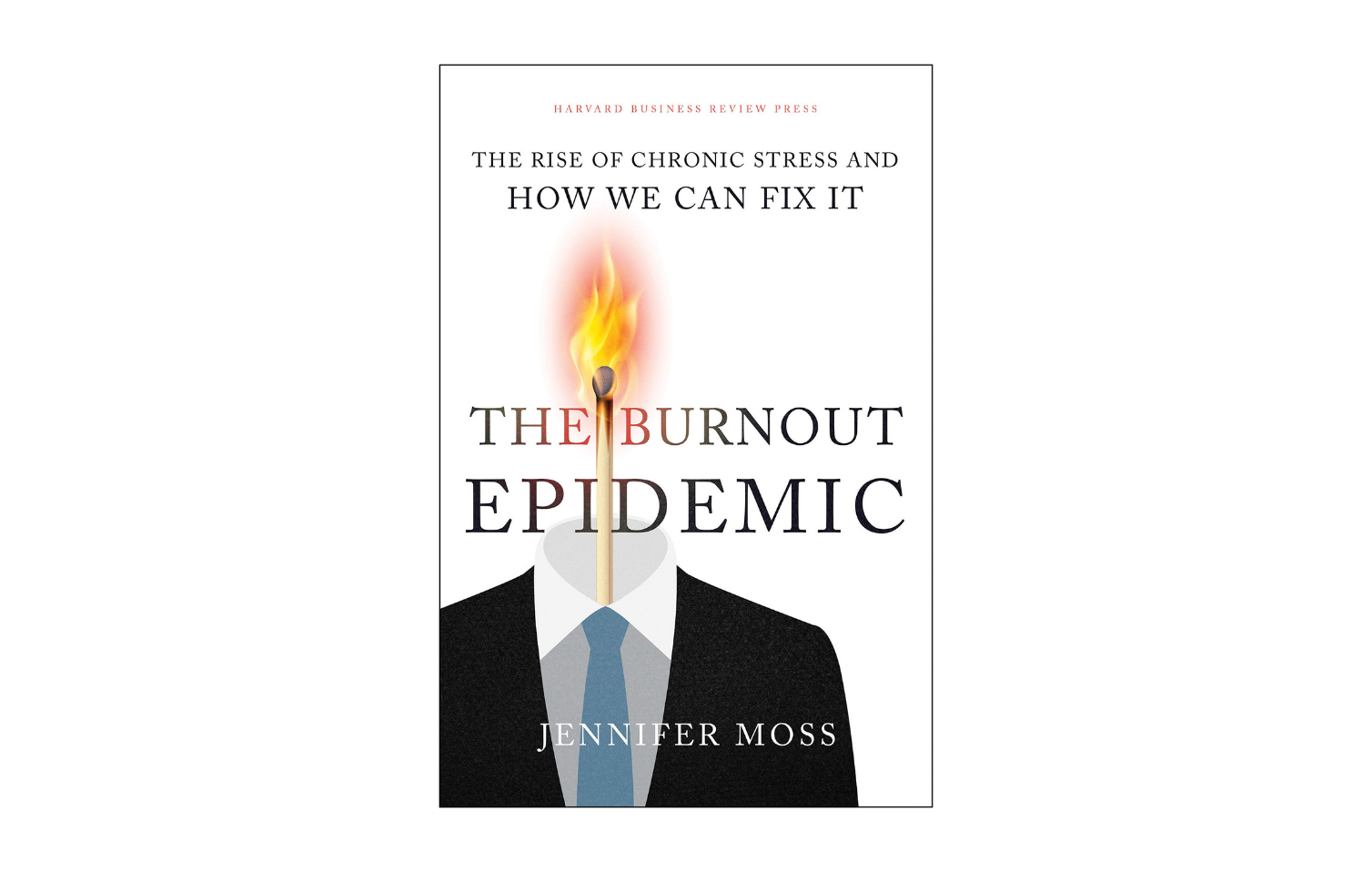
Jennifer Moss is the author The Burnout Epidemic, published by Harvard Business Press in 2021.
Take your Learning Further
Order Jennifer’s Burnout Workbook to deepen your personal understanding, reduce risk factors, and strengthen your own workplace well-being.
FAQs on Workload and Burnout
-
A heavy workload involves high demands for a defined period, often paired with clear priorities, autonomy, and adequate recovery. An unsustainable workload occurs when high demands persist without sufficient time, control, or support to recover. Over time, this imbalance keeps the body and brain in a chronic stress state, increasing the risk of burnout. The key difference isn’t effort — it’s whether recovery is built into the system.
-
Yes. Enjoyment and purpose can delay burnout, but they don’t prevent it. Many people experiencing burnout are highly engaged, motivated, and committed to their work. When recovery is consistently postponed — even in meaningful roles — the nervous system eventually becomes depleted. Burnout isn’t a sign that you don’t care; it’s often a sign that you’ve been caring without enough capacity to recover.
-
Workload is one of the most common contributors to burnout, but it’s rarely the only factor. Burnout risk increases when high workload is combined with low control, unclear expectations, lack of recognition, or misalignment between values and demands. In many cases, workload acts as the trigger that exposes deeper system issues rather than being the sole cause.
-
Workload expectations may be too high when performance is maintained only through longer hours, constant urgency, or reduced recovery. Warning signs include rising errors, emotional exhaustion, disengagement, increased sick time, or high turnover among high performers. Sustainable workload isn’t measured by output alone — it’s measured by whether teams can perform well and recover consistently over time.
-
No. Burnout caused by workload isn’t resolved through increased effort or resilience training alone. Working harder may temporarily mask the problem, but it often deepens exhaustion and delays recovery. Lasting improvement requires changes to workload expectations, prioritization, recovery time, and — in many cases — organizational systems that shape how work gets done.
-
Workload should be treated as a burnout risk when high demands are sustained for weeks or months without meaningful recovery, flexibility, or support. If rest no longer restores energy, or if people feel they must constantly push beyond their limits to keep up, the system is likely unsustainable — even if results still look strong on the surface.
Want to Prevent Burnout in Your Organization?
When burnout starts appearing across teams, roles, or performance metrics, it’s no longer an individual issue — it’s a leadership and systems challenge. Jennifer Moss works with organizations at this inflection point to help leaders understand why burnout takes hold, how workload and culture contribute to it, and what sustainable performance actually looks like in practice.
Learn how Jennifer’s award-winning Combating Burnout keynote helps organizations reset expectations, address root causes, and rebuild healthier, high-performance ways of working — or explore leadership workshops designed for deeper organizational change.